
IT’S SAADY’S TURN – HESPEDIM AND REFLECTIONS

It was the wedding of Rabbi Uri Feintuch, Saadya’s rebbe at Makor College Experience at Yeshiva University. The dancing was lively. Suddenly, Saadya appeared. He began to gently push all the guests to the side. After the center of the dance floor was clear and he had the attention of all the guests, he said, “It’s Saadya’s turn.” He then did what he knew best – he brought joy and happiness to all in his presence.
Saadya was born almost thirty-six years ago on Yom Yerushalayim and was niftar on Yom HaZikaron. Rabbi Daniel Meyer noted that these events were no coincidence; Saadya’s love for Eretz Yisroel was special, and his neshama was deeply connected to the holiness of the Land.
Saadya passed away three weeks shy of his thirty-sixth birthday. Certainly, Rabbi Meyer posited, there is significance and symbolism in the double intensity of chai, life itself, in Saadya’s life.
Saadya grew up in Flatbush. Many remember how his parents would hold their little toddler by his arms and lead him around the block to train him how to walk. To the uninitiated, the scene was a bit awkward. Those in the know, however, understood that Saadya was what society labels a “special needs” child. His parents, with an aura of nobility, made it clear from the beginning that they were committed to ensuring that this little boy would have every available opportunity and reach his full potential. More than thirty years later, as we witnessed the heart-wrenching emotion and grief displayed at the levaya by world-renowned maspidim, the sincerity of their commitment was clearly evident. At that time, more than ever, we appreciated the huge effort and sacrifice that brought his parents’ dreams to fruition.
If Saadya were alive today and given the chance to say a few words in response to what has been said and done this past week in his memory, what would he say? Surely he would echo the sentiment that his mother t”l Mrs. Ahava Ehrenpreis, expressed in speaking about her parents in the opening of her recently published book On My Own… But Not Alone: “What we can do is a gift from the Creator, given to us through the blessing of genetic material received from our parents. I am no different, having the blessing of a family who nurtured me . . .”
In the midst of a global pandemic, when the painful feeling of crisis is palatable when impossible circumstances stubbornly present themselves when funerals are categorically forbidden and only a handful of people are allowed to enter the cemetery, the expectation that a loved one will receive appropriate honor and tribute is nonexistent. Yet, in Heaven, it was decided that Saadya would be the exception. Through the resourcefulness of Saadya’s older brother Raphael Dovid, affectionately known as Dedi, and the devotion and skillful technical assistance of Rabbi Yisroel Semmel of Valley Village, California, a magnificent, heartfelt levaya was organized in record time, drawing more than one thousand people in virtual attendance. The sentiment rang out loud and clear—we too need to express our pain and grief. We too need to feel the agony at this time of loss. Saadya was a part of our family too.

Rabbi Raphael Dovid, Saadya’s older brother, a talmid chacham of note and a talmid muvhak and ben bayis of Rav Dovid Feinstein, shlita, delivered the first hesped. He explained that the defining quality of Saadya was his ability to see the essence of every person and every situation. He was not distracted by the noise that blurs reality. He was not judgmental. It did not matter to him what you looked like or how you sounded. He saw you for who you were. Despite his non- judgmental attitude, he was by no means a simple person. In fact, he was far ahead of us all. He knew what was important and what mattered, especially in dealing with people. His level of understanding was above and beyond that of everyone else. The complexity of his thoughts was very deep.
Rabbi Ehrenpreis noted that Moshe Rabbeinu asked Hashem two questions: First, let me understand your ways, and second, let me see Your glory. It appears, however, that Hashem answered only the second question. Hashem shows Moshe a partial view of His glory, but not His ways.
Rabbi Ehrenpreis explained that Hashem was teaching Moshe that when you see the glory of the person – his essence and persona – you then know and understand his ways. Some of us need to learn sifrei mussar and halachic works to understand Hashem’s ways because we are not worthy to see Hashem’s glory. But others are able to discern Hashem’s ways by seeing His glory. To see Hashem’s glory, however, you need a special neshama. Saadya had that neshama. He was able to see our ways by perceiving our essence.
Rabbi Ehrenpreis noted that it is customary to ask forgiveness from the niftar at a funeral, but regarding Saadya, it would be unnecessary; Saadya, never had a complaint or hakpada on anyone. Nevertheless, he certainly deserves that we ask him for forgiveness.

Rabbi Aharon Kahn, Rosh Yeshiva at REITS, Yeshiva University, and Mara d’Asra of Knesses Beis Avigdor, spoke from his home in Flatbush. He related that Saadya was loved by everyone so much because Saadya saw in us everything that is truly good about us. He brought out the good in us. He polished us like a gem. He held us in his heart and cherished us. He saw the potential we had and gave us a yearning that perhaps we could, indeed, achieve what he saw in us.
Rabbi Kahn also related that Saadya had a tremendous connection to Hashem through music. He was an expert in every song, and his delight in singing zemiros was unmatched.
Saadya was not just a neighbor and member of Rabbi Kahn’s shul. He was like a son to him. In the past few years, Rabbi Kahn entrusted Saadya with leading the Hakafos on Simchas Torah. Everyone joined with him as he stood at the Bima, “like a captain of a ship.” He stood with pride as he read the mi’pi Kel. He banged on the table and encouraged everyone to dance harder and sing deeper.
Saadya never judged anybody or thought poorly of anyone. As Rabbi Kahn not- ed, Saadya was a walking Sefer Chafetz Chaim. He never spoke a bad word about anyone, displaying only kindness, generosity and love.
Rabbi Kahn praised the “Yeshiva ha’gedola ve’hakedosha,” referring to Yeshiva University, for the magnificent chesed it has done by providing a home for the Makor College Experience. The program enabled Saadya and his chaverim to have a real portion in Torah that they could call their own.
During Saadya’s time in the Makor program, he made a siyum and graduated. This combination of achievements gave Saadya enormous excitement, satisfaction and fulfillment. Saadya would always remind Rabbi Kahn that he would invite him to the siyum and that he wanted him to come.
In the Torah, we learn of the obligation to recite a confession at the time we conclude bringing our tithes. We recite the words “asisi k’chol asher tzivisani,” I have done all that You have commanded. The Talmud Yerushalmi understands this expression to mean that “I have rejoiced and caused others to rejoice.” There is no person we know of other than Saadya of whom it could be said that he indeed rejoiced in Hashem’s ways and caused others to rejoice all the days of their life.
Rabbi Kahn read an excerpt from the eloquent letter that Saadya’s mother, t”l, wrote to her son, which appeared recently in Mishpacha magazine: “Saadya, you are the most positive person who ever walked the face of this earth. You never get angry at other people and certainly never toward the Ribono shel Olam. You see sunshine where others see the clouds, you smell the roses where others feel the thorns, you abhor hostility and anger and any kind of tension between people, even if it is not directed at you!”
Rabbi Kahn concluded with a teaching of the Alter of Kelm, Rav Simcha Zissel Ziv. The Alter explains that the purpose of aveilus is to be nosei b’ol im chaveiro, to share in the carrying of the burden of your friend. The time of death is a moment of harsh judgment. The niftar is in a state of trepidation of the Divine judgment that awaits him. When the family and friends of the niftar mourn and cry, they remove some of that pain and fear from the niftar. In the case of Saadya, however, there is no judgment, for he has done no harm. The pain we experience at this moment is thus atypical. It is an expression of emotion where we join the spiritual elevation and ascent of his neshama.

Rabbi Dr. Ari Berman, President of Yeshiva University, expressed his deep pain over Saadya’s premature loss. The devastation of knowing that Saadya was planning to enjoy his graduation in May only intensifies the pain.
Rabbi Dr. Berman related that his connection to the Ehrenpreis family spans his two areas of residence: Neve Daniel in Eretz Yisroel, as a neighbor of Saadya’s sister and brother-in-law, Nachama and Daniel Meyer, and New York, at Yeshiva University.
Rabbi Dr. Berman shared that when he thinks of Saadya, he recalls the posuk that describes Yaakov Avinu: “V’Yaakov ish tam, yoshev ohalim.” The posuk describes Yaakov with two attributes: a person of purity, and one who studies in the tents of Torah, the beis medrash of Shem and Ever.
This posuk aptly describes Saadya. Saadya was pure. As Rabbi Dr. Berman noted, “Saadya was goodness personified. It was the reason why everyone loved him. Everyone loved Saadya because Saadya loved everyone.” He did not see anything bad in anyone. He was “mammash tamim,” in ways beyond what we can fathom.
Saadya was also an ish ohalim. He loved and surrounded himself with Torah teachings, its practices, tefillah, siyum, learning Torah, loving Torah, having a relationship with Hashem, and loving Hashem. Saadya was the yoshev ohalim “in a very direct sense, of someone who is not just a part of, but central to, our lives and the Beit Midrash of our Yeshiva.”
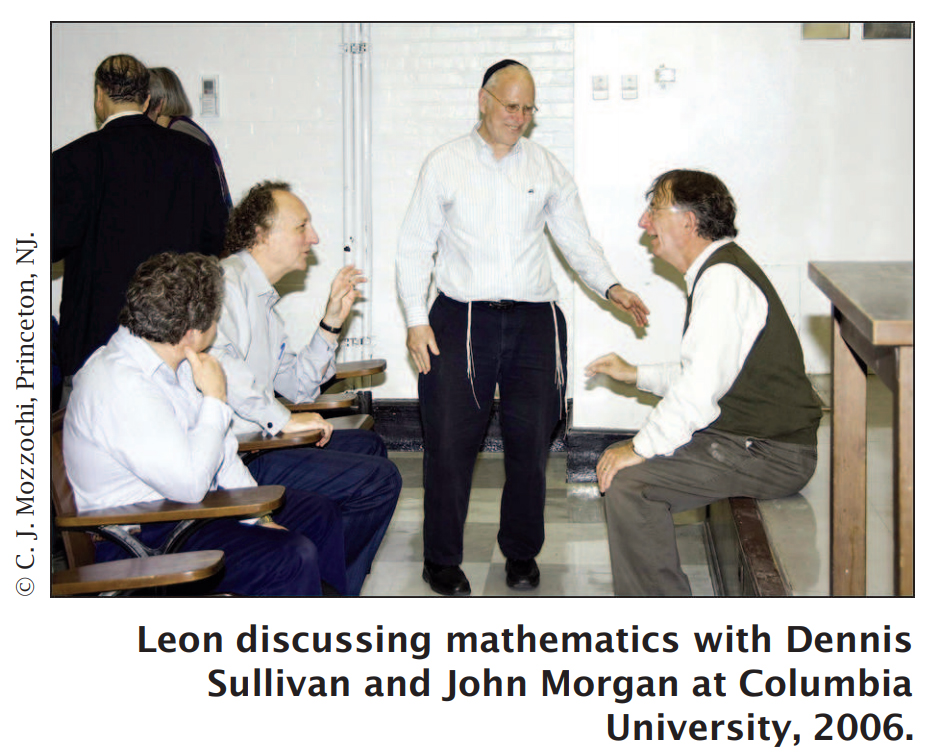
Rabbi Dr. Berman noted that in his role as President of Yeshiva University, it was his particular honor to speak in Saadya’s memory because Saadya and his family are deeply part of the Yeshiva family. Saadya’s father, Rabbi Dr. Leon Ehrenpreis z”l, was a musmach of Rav Moshe Feinstein zt”l, and one of the world’s top mathema- ticians. When Dr. Belkin z”l initiated the project to establish Yeshiva University’s name in the math and science departments, Dr. Ehrenpreis left one of the best departments in the world to join Yeshiva University because he heard the call of the Jewish people to teach at Yeshiva University. “His life was a primary example of all our core and holy values.” His memory and legacy continue to be cherished by the Yeshiva University community. It was in continuation of this incredible legacy that Saadya felt about his own place at Yeshiva University.
Saadya had a dream long before the Makor program was created. It was well known that he told his family that he would be a student at Yeshiva University. When he received his acceptance letter and came to the beis medrash at Yeshiva University, he was so proud, recalled Rabbi Dr. Berman. Saadya’s dream had come true. He took pride in telling everyone that he was on the “Staff” of Yeshiva University, just as his father had been. He was a “beloved” member of the Yeshiva University family, central to the Beis Medrash and to the entire Yeshiva community.
On behalf of Yeshiva University, Rabbi Dr. Berman extended his greatest wishes and warmest feelings of comfort and healing to Saadya’s wonderful mother, Ahava, “whose name depicts her character—k’shema kein hi,” and to his loving siblings, the Yeshiva, and the entire Jewish people.
In conclusion, Rabbi Dr. Berman said of Saadya, “We will always remember you, your warm and embracing smile, your embracing smile that gave us all joy, your love that made us feel loved, your preciousness and goodness that elevated everyone in your presence.”
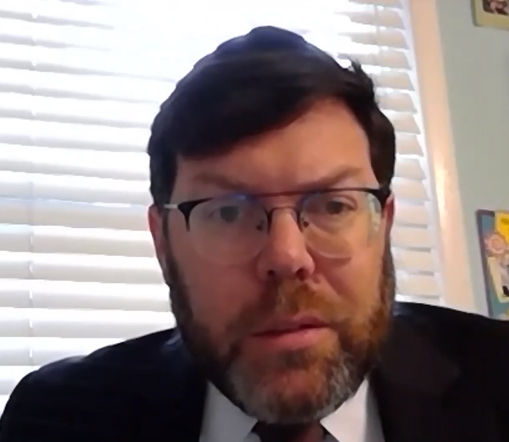
Rabbi Menachem Penner, the Max and Marion Grill Dean of REITS at Yeshiva University and Mara d’Asra of the Young Israel of Holliswood Queens, recounted the bond that he and his wife shared with Saadya and his family, not only in the role as Dean of the Yeshiva, but at Camp HASC many years earlier. Fondly recalling the times that he and his wife hosted Saadya in their home for the Shabbaton of the Makor program, Rabbi Penner noted that Saadya “brought a tremendous light into the world and a tremendous light into our home.”
He expressed that although Saadya was taken from us, he did not go very far because he was in a certain way closer to Shomayim than he was to this world. He compared Saadya to Nadav and Avihu, who left this world when they entered the Kodesh ha’Kadashim. Some of the commenters explain that many misunderstand Nadav and Avihu as entering a place where they did not belong. In truth, though, they were more connected to that world than to this world. The Kodesh Kadashim is where they belonged. The Shem mi’Shmuel explains this idea by noting that the name of Hashem that the posuk uses in describing their death is the name of Rachamim instead of the name of Din, as would be expected. This indicates that their death was different from that of the common man. Saadya was likewise connected to this other world. Saadya belonged in Hashem’s hands.
From our perspective, special needs children do not really fit into this world. They stand out. Rabbi Penner explained that it is not because the world is right or represents truth. Instead, these children represent truth. They do not fit into this broken world. Saadya stood out not because he had a disability but because the world is not ready for Saadya. In this broken world, he does not fit in exactly. Saadya belonged in Hashem’s hands, as painful as that is for us.
Rabbi Penner also reminisced how Saadya was comfortable with himself. He did things at his own pace. He came and went when he was ready. He davened a long Shemona Esrei at his own pace. He marched to his own beat. “It was a heavenly beat.”

Rabbi Daniel Meyer, a brother-in-law of Saadya, and the Executive Director of the International Young Israel Movement spoke from Eretz Yisroel. Saadya spent four very special years learning in Yeshivas Gush, Har Etzion. The first time Rabbi Meyer met Saadya was when Rabbi Meyer was dating Saadya’s sister Nachama and came to meet the family. Learning of the new visitor, Saadya bounded down three flights of stairs and asked him if he was his sister’s boyfriend. Rabbi Meyer told Saadya to just give him a hug and they will be friends. “It is this hug I still feel twenty years later,” Rabbi Meyer emotionally recalled. “It has always lived with me. It was at that moment I fell in love with you. That was an everlasting hug that I will never forget.”
Saadya had a very special talent. He was able to make people feel comfortable with people like himself who had special needs. His secret was that he did not think of himself as any different from anyone else. He thought he was one of the guys.
During the first Shabbos that he spent with his sister and brother-in-law in Neve Daniel, some children in the neighborhood stared at Saadya, noticing something different about him. After their parents explained the concept of a special needs child, they instantly became his best friend, as did every other person who came in contact with him.
To Saadya, it did not matter if you were tall, short religious, nonreligious, American, Israeli, or Australian; he loved everyone unconditionally. “If there would ever be a Nobel prize for breaking down barriers between different types of people, Saadya would be sure to win,” Rabbi Meyer said.
All Saadya ever wanted in life was to be one of the guys, to be like everyone else. In the first year that he spent in Eretz Yisroel, when he had a graduation ceremony for the conclusion of the first year, he had so much pride and happiness to be in a program and achieve a goal, to be like everyone else.
During that first year, the Meyers invited Saadya every single Shabbos, but they hosted him perhaps only two times. He was so popular that he was in a different Yeshiva every Shabbos. He conquered the entire Eretz Yisroel. He would always say that next year, he would be back, learning in Kollel, and make Aliyah.
“He was to me like a younger brother I never had. We had so many good times,” Rabbi Meyer shared.
Rabbi Meyer then described that he and his family had the good fortune to host Saadya several years for the month of Tishrei. Saadya helped build the sukkah and accompanied Rabbi Meyer to shul. “You elevated our month . . . Tishrei will never be the same again. Who will tell me that I have the most beautiful esrog?”
Although the Meyers would have loved for Saadya to stay with them for Simchas Torah, he told them that he had a responsibility to get back to Brooklyn, to return to Rabbi Kahn’s shul to lead the Hakafos. With a heavy heart, they had no choice but to let him go home, but holding onto the lesson of pure joy that Saadya instilled in them. Speaking on behalf of his wife Nachama and their daughters, Rabbi Meyer concluded by saying, “You live on in our hearts and you live in our minds. Whenever we are sad, we will think of you and smile.”
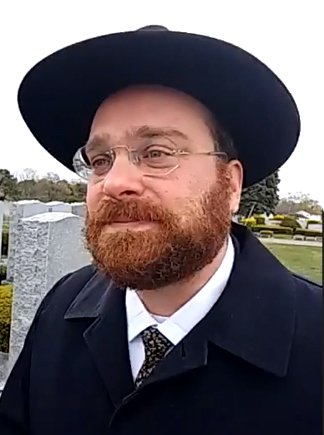
Rabbi Uri Feintuch, Saadya’s rebbe at Makor, delivered a powerful, emotional tribute to his talmid. He related that the happiest time of his life was when Saadya danced before him at his wedding.
Saadya would listen intently to his shiur. If he did not understand, a pain of frustration became evident on his face. When the rebbe would repeat the shiur, and Saadya would understand, Saadya’s joy was unimaginable. Chazal say that if someone did not see the joy of simchas beis ha’shoeiva, he never experienced joy in his life. Rabbi Feintuch compared Saadya’s joy in understanding Torah to this joy referred to by Chazal.
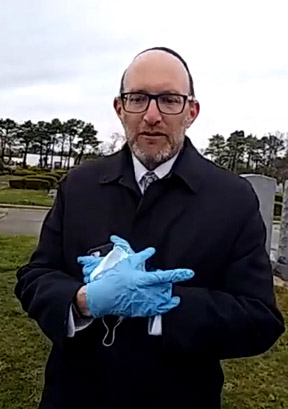
Dr. Stephen Glicksman, Director of Clinical Innovation, Makor Disability Services, and Adjunct Professor at Yeshiva University, related that when Saadya stayed with him during his participation in the Makor program, Saadya brought so many people together in unusual ways. Dr. Glicksman particularly relished the fact that Saadya’s public contact profile byline read: “Having the time of my life.” He conveyed, together with the Residence administrator, how everyone at Makor will miss Saadya dearly.
Reflecting upon these extraordinary hespeidim, I recalled a conversation that I had with Rabbi Dr. Eliezer Ehrenpreis, z”l, years ago. He told me that when Saadya was born and he and his wife realized that their son would be a “special needs” child, he went to speak with his rebbi, Rav Dovid Feinstein, shlita. During that conversation, Rav Dovid told him to give his new child an exotic name. A child like this needs to stand out in the crowd, Rav Dovid explained. An exotic name goes a long way. They named him Saadya.

Housing and Residence Life
At that time, and even today, we do not hear the name Saadya often. I never asked Dr. Ehrenpreis why he chose that name. Perhaps it was because Rav Saadya Goen was a world-renowned mathematician; that certainly would have resonated with Dr. Ehrenpreis.
After Saadya’s petira, I was told that Rav Chaim Kanievsky writes that the name Saadya is indeed unusual. The first time that we find the name Saadya in our records of Jewish history is in reference to Rav Saadya Goen.
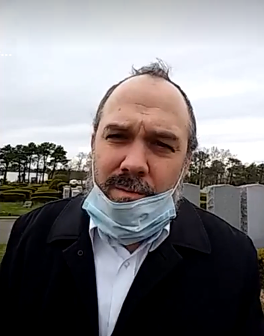
It is important to note that the title “Goen” was permanently appended to Rav Saadia’s name after he was appointed as one the greatest Goenim of his era. In the era of the Goenim and even more recently in reference to the Vilna Goen, the title “goen” denotes exceptional brilliance and encyclopedic knowledge, interlaced with spiritual holiness and refinement. Many Gedolei ha-Dor did not tolerate the use of such an accolade, considering it an abuse of the term and disrespectful to those who truly deserve it.
However, there is another translation of this word. We recite every year on Rosh Hashanah from Tehilim, “es goen Yaakov asher Aheiv”, The pride of Yaakov which You love. In this context, the word “goen” conveys a healthy spiritual pride, connoting a self-awareness and proud sense of fulfillment and accomplishment. In our davening on Rosh Hashana, we refer to Klal Yisroel by this term, not for our wisdom or brilliance, but for our proud sense of fulfillment in being who we are and our unique relationship with Hashem.

For those who knew Saadya, and as the hespeidim at the levaya clearly attest, no one expressed this healthy pure pride of achievement and happiness more than Saadya Ehrenpreis, z”l. He was our Saadya Gaon.
Saadya was a product of the best of Klal Yisroel. In addition to the care and guidance that his parents and family lovingly provided, many institutions, organizations, and individuals from the entire spectrum of Klal Yisroel selflessly devoted time, effort, and financial resources so that Saadya could have “his turn” in life. His life was a living mussar sefer for every student of life. He had a lesson for every person who came his way. He was multi-dimensional and multi-faceted. His return to Shomayim brings with it the merit of each partner in his development. Indeed, Saadya brings with him the merits of the entire Klal Yisroel. Fortunate are the parents who raised him.
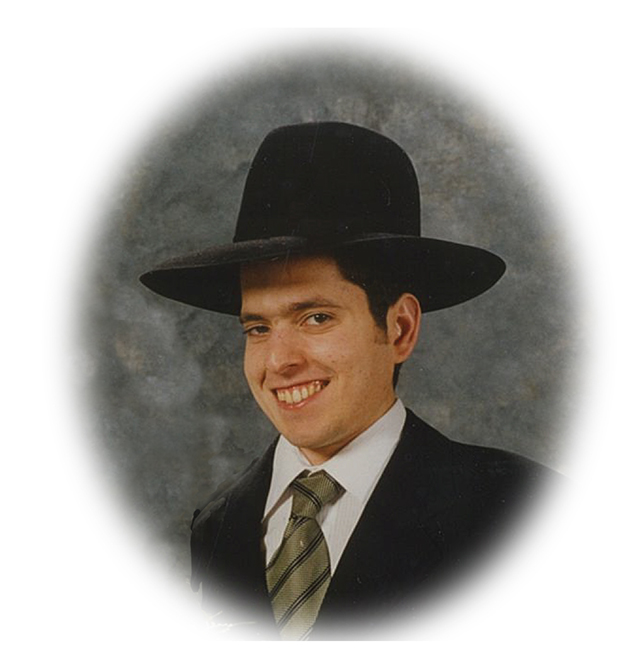
Saadya was buried next to his brother Akiva Shamai, z”l. Saadya was Kivi’s chief champion and cheerleader during the difficult time of his illness that affected so many of us. A few kevarim away is their father Rav Eliezer, z”l. May their neshamos be bound b’tzror ha-Chayim.
Saadya’s enduring influence can be found in many people, but especially in his family, including his mother, Mrs. Ahava Ehrenpreis, his brother Rabbi Raphael Ehrenpreis, and his sisters Mrs. Ann Scherzer, Mrs. Naomi Langer/Voss, Mrs. Nachama Yaelle Meyer, Kiki Ehrenpreis and Mrs. Yocheved Orlofsky.

It is customary to conclude words of hesped with a plea for the niftar to be a meilitz yosher. Please permit us to elaborate.
Saadya, you will certainly ascend to the lofty, holy places in heaven. If you happen to witness heavenly creatures arguing before Hashem that we are not deserving, if you happen to hear our spiritual adversaries complain before Hashem about our shortcomings, please do what we cannot. Push them all to the side. Assert yourself and demand attention. Stand in the center. Raise yourself tall and strong. Declare with your infectious smile: “It’s Saadya’s turn!”
Yehi zichro baruch.